
The Blue Shark and the Clownfish – An Unlikely Ocean Partnership
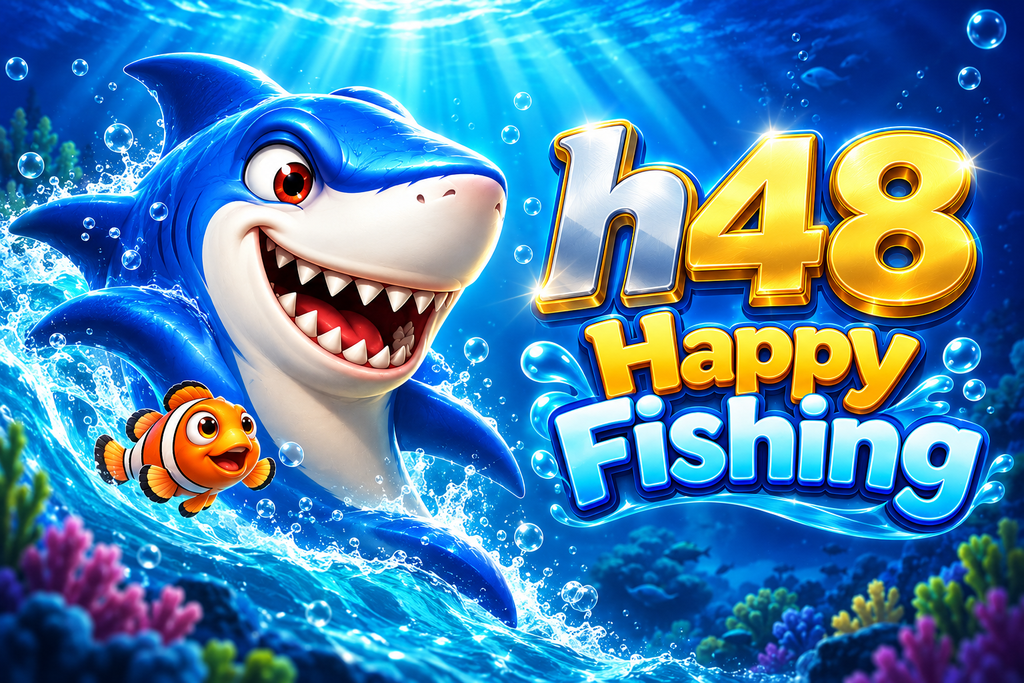
A giant blue shark opens its mouth in an enormous grin while a tiny orange clownfish swims beside it. In the real ocean, these two creatures would rarely form such a cheerful partnership. In h48 Happy Fishing, however, their contrasting appearances establish the playful personality of the underwater world.
The shark dominates the image with its rounded snout, sharp white teeth, and expressive red eyes. Despite its intimidating size, the character looks more excited than dangerous.
The clownfish provides the opposite visual impression. Its small body, orange-and-white stripes, and surprised expression make it appear curious and energetic.
Together, they create an interesting contrast between strength and innocence.
This relationship gives the artwork a sense of storytelling without requiring dialogue or additional characters.
Players can immediately recognize two different personalities sharing the same environment.
The contrast also raises a broader question about ocean-themed entertainment. How can recognizable marine animals help create an engaging game world while remaining visually distinct from their real-life counterparts?
The answer begins with understanding the environments these creatures represent.
The Coral Reef – A City Beneath the Waves
Coral reefs are among the most visually complex environments in the ocean.
They contain intricate structures, narrow passages, and colorful marine organisms. These environments provide shelter and feeding opportunities for many species.
The h48 Happy Fishing illustration includes colorful coral formations near the bottom of the scene, suggesting a lively underwater habitat.
Although the artwork uses a fictional style, its setting draws inspiration from real marine ecosystems.
Why Coral Shapes Matter
Coral formations create natural visual boundaries.
Tall structures can suggest depth, while smaller clusters help distinguish the foreground from the background.
In a digital game environment, these shapes can make an underwater scene feel more believable.
They also prevent the ocean floor from appearing empty.
Color Creates Different Ocean Zones
Bright coral colors suggest shallow, sunlit environments.
Darker blue regions create the impression of deeper water.
By combining these colors, an illustration can suggest multiple underwater layers without displaying an actual map.
Background Creatures Add a Sense of Life
Small fish silhouettes in the distance can make an environment feel populated.
They help communicate scale because the viewer can compare them with the much larger shark in the foreground.
These details enrich the atmosphere even when they do not represent interactive gameplay elements.
Why the Shark Looks Friendly Instead of Frightening
A realistic shark illustration might emphasize streamlined anatomy, powerful jaws, and natural hunting behavior.
The shark in h48 Happy Fishing takes a different approach.
Its oversized head and exaggerated smile create a cartoon personality.
The eyes are particularly important.
Rather than portraying an emotionless predator, the character uses expressive features to communicate excitement.
This transformation is common in family-friendly animation and stylized entertainment.
Exaggerated Proportions
The shark’s head is unusually large compared with its body.
This makes facial expressions easier to recognize, especially when the image appears on a small screen.
Rounded Features
Although the teeth remain sharp, the rounded snout and smooth body soften the character’s appearance.
The result is a creature that looks energetic rather than threatening.
Bright Blue Coloring
The shark’s saturated blue skin contrasts with its white underside.
This makes its silhouette recognizable against the darker ocean background.
The character is clearly designed for entertainment rather than scientific accuracy.
Understanding that distinction allows players to appreciate the creative interpretation without confusing it with real marine biology.
The Clownfish – A Small Character With a Big Personality
The clownfish may occupy only a small portion of the artwork, but it performs an important storytelling role.
Its bright orange coloring immediately separates it from the blue shark.
The white stripes and black outlines also make the fish recognizable.
In nature, clownfish are associated with sea anemones, where they participate in a well-known mutualistic relationship.
The fish receive protection among the anemone’s tentacles, while the anemone may benefit from the clownfish’s activities.
The Happy Fishing game illustration does not attempt to reproduce this ecological relationship.
Instead, it places the clownfish alongside the shark to create a humorous contrast in size.
This choice demonstrates how a small supporting character can add emotional variety to a larger scene.
Without the clownfish, the shark would remain visually impressive.
With the clownfish, the image suggests companionship, curiosity, and an underwater adventure.
The Ocean Depth Map – Reading the Environment
One interesting way to appreciate underwater game artwork is to examine how it suggests different depths.
The Happy Fishing image contains several visual layers.
| Ocean Layer | Visible Features | Artistic Purpose |
|---|---|---|
| Sunlit water | Bright rays from above | Creates an open, energetic atmosphere |
| Middle water | Shark and clownfish | Establishes the main character scene |
| Distant ocean | Darker blue water and silhouettes | Suggests depth and scale |
| Seabed | Colorful coral formations | Gives the environment structure |
These layers are part of the illustration’s composition rather than confirmed gameplay zones.
Nevertheless, they demonstrate how environmental design can create a sense of exploration.
The viewer’s attention moves from the bright surface toward the characters and finally down to the ocean floor.
This creates a natural visual journey.
For underwater-themed games, environmental depth can help make a scene feel larger than the screen itself.
The Science Behind Underwater Colors
Water changes the appearance of light.
As sunlight travels through the ocean, different wavelengths are absorbed at different rates.
Red light generally disappears more quickly than blue light, which is one reason deeper underwater environments often appear blue.
The h48 Happy Fishing artwork uses this familiar visual association.
Bright cyan highlights suggest sunlight entering the water, while darker blue regions create a sense of depth.
The shark’s vivid coloring is more exaggerated than a realistic underwater photograph would typically show.
That exaggeration serves a purpose.
A realistic depiction might make the character blend into the surrounding environment.
By increasing contrast, the illustration keeps the shark recognizable.
Why Orange Stands Out
The clownfish’s orange coloring contrasts strongly with the blue surroundings.
This makes the small character visible despite its limited size.
Why White Highlights Matter
White areas on the shark and clownfish help define their shapes.
They also make facial expressions and body details easier to distinguish.
Why Dark Blue Creates Distance
The darker background makes the foreground characters appear closer to the viewer.
This is a simple but effective technique for establishing visual depth.
From Ocean Artwork to Actual Gameplay
An attractive underwater setting can create expectations about a game.
However, promotional artwork does not establish which mechanics are available.
For example, the presence of a shark and clownfish does not automatically mean that players can control these characters, explore coral reefs, or complete specific missions.
Those features must be confirmed through the playable version.
When exploring h48 Happy Fishing, begin with the available instructions.
Identify the main controls and determine how the interface communicates completed actions.
If the game includes different marine creatures, check whether their functions are explained.
Do not assume that a larger or more colorful character automatically has greater gameplay significance.
The same applies to underwater effects.
Bubbles, splashes, and glowing objects may create atmosphere, communicate events, or serve other documented functions.
Their meaning depends on the actual game rules.
This distinction helps players understand the experience without confusing decorative elements with gameplay information.
Creating a Marine Creature Field Guide
The underwater theme provides an opportunity for a creative activity beyond ordinary gameplay.
Imagine creating a fictional marine field guide inspired by the Happy Fishing artwork.
Each entry could describe a creature’s appearance, personality, and imaginary habitat.
For example:
The Laughing Blue Shark
Appearance – Bright blue body, large head, white underside, and exaggerated smile.
Personality – Energetic, curious, and surprisingly friendly.
Imaginary Habitat – Open water near colorful coral formations.
The Curious Orange Clownfish
Appearance – Small orange body with white stripes and dark outlines.
Personality – Adventurous, expressive, and eager to explore.
Imaginary Habitat – Shallow reef areas with plenty of hiding places.
These descriptions are creative interpretations, not official character profiles.
You can expand the activity by inventing additional creatures that fit the same artistic style.
A glowing jellyfish might inhabit deeper water.
A shy sea turtle could travel between coral formations.
A colorful seahorse might hide among underwater plants.
The challenge is to create characters that feel consistent with the cheerful atmosphere of h48 Happy Fishing.
This exercise turns the game’s visual theme into a small world-building project.
What Makes an Underwater Game Environment Memorable?
A memorable game environment needs more than colorful scenery.
It benefits from a recognizable visual identity, consistent atmosphere, and characters that are easy to distinguish.
The Happy Fishing artwork combines these elements through its expressive shark, supporting clownfish, and bright ocean setting.
Its characters establish personality.
Its coral formations establish location.
Its lighting creates depth.
The large game title provides immediate recognition.
These elements work together to create a coherent visual theme.
However, the quality of an actual gameplay experience also depends on factors that promotional artwork cannot demonstrate.
Readable instructions, understandable controls, responsive interaction, and stable performance all contribute to usability.
A game can have excellent artwork while still requiring players to learn its interface carefully.
For this reason, visual design and gameplay functionality should be evaluated separately.
Ocean-Themed Gameplay Without Common Misunderstandings
Fishing-themed digital games may contain moving creatures, animated water, and colorful effects.
These elements can make the screen feel constantly active.
That activity should not be mistaken for evidence that every visual movement has a special meaning.
A large character appearing on screen does not independently establish a particular outcome.
Likewise, repeated animations do not necessarily reveal a predictable sequence.
Players should rely on the documented rules to understand how the game functions.
If the game includes chance-based mechanics, previous results should not be assumed to determine future outcomes.
For beginners, the most useful approach is to understand the interface before interpreting unusual events.
This allows the ocean theme to remain enjoyable without creating unsupported expectations.
Frequently Asked Questions About H48 Happy Fishing
What is the main theme of H48 Happy Fishing?
h48 Happy Fishing uses a colorful underwater theme featuring a cheerful blue shark, a small orange clownfish, coral reefs, and bright ocean lighting.
Is the blue shark a playable character?
The shark is prominently featured in the promotional artwork. Whether it can be controlled or has a particular gameplay function depends on the actual game version.
What makes the clownfish recognizable?
Its orange body, white stripes, dark outlines, and expressive face make it visually distinctive against the blue underwater background.
Does Happy Fishing include different ocean environments?
The artwork suggests multiple underwater depths through lighting and background scenery. Actual gameplay environments and available features should be confirmed through the game’s instructions.
Can beginners enjoy the underwater theme without knowing the game rules?
Players can appreciate the artwork and characters immediately. However, understanding the actual gameplay requires reviewing the available instructions and controls.
Why does the game use bright blue colors?
Blue reinforces the underwater setting, while bright highlights help distinguish the main characters from the background. The exaggerated colors also support the game’s cheerful cartoon style.